
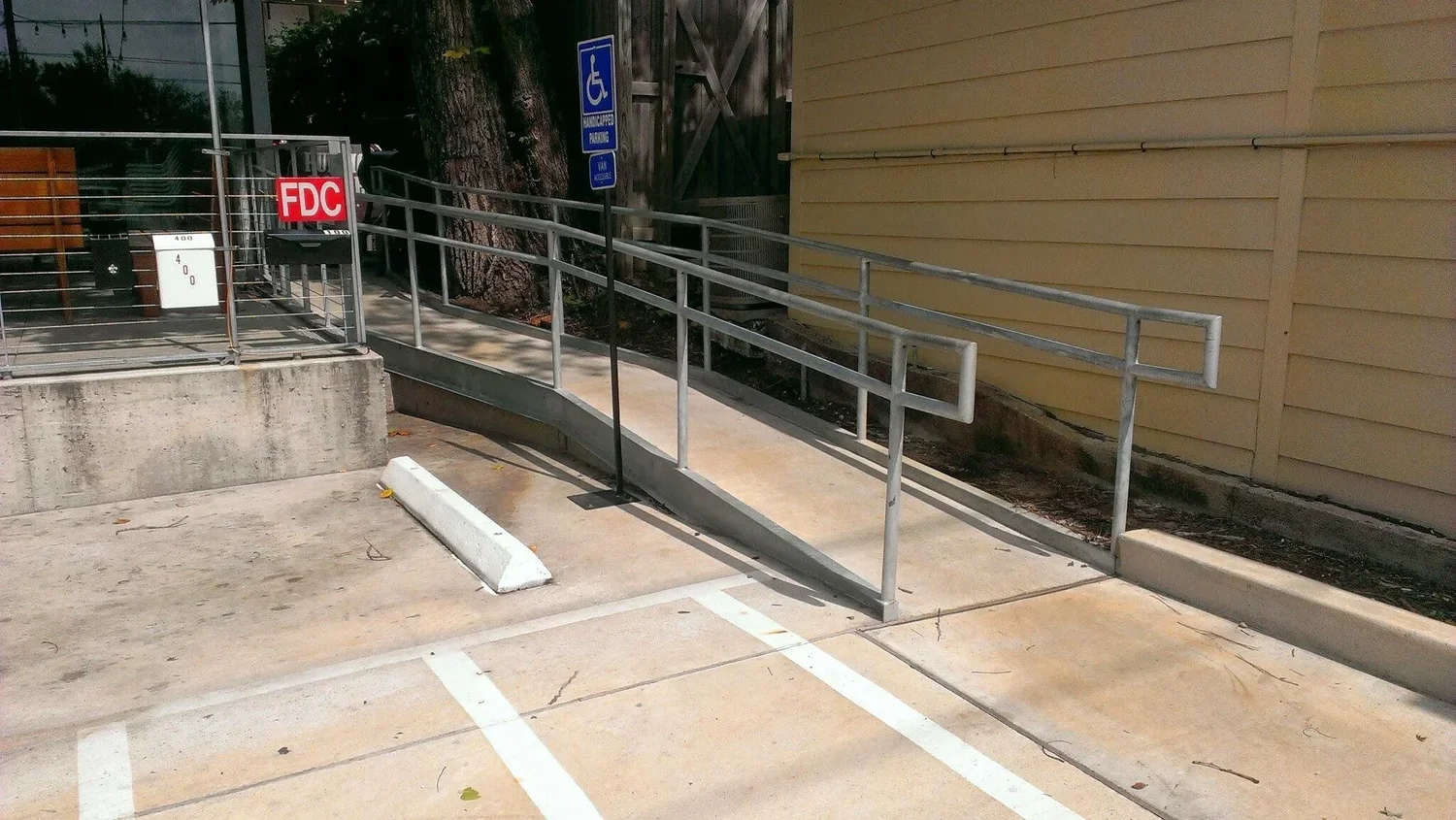
Edge Protection Requirements
Edge protection is a critical safety feature in the design and construction of accessible routes. While often overlooked, these features can significantly impact the usability of ramps, landings, and walking surfaces. Their presence or absence plays a crucial role in accessibility. This is especially true where elevation changes on the sides of ramps create potential hazards. This blog examines when edge protection is required under applicable accessibility codes and standards.
Clarifying Code & Compliance for Accessible Routes
Edge protection is a critical safety feature in the design and construction of accessible routes. While often overlooked, these features can significantly impact the usability of ramps, landings, and walking surfaces. Their presence or absence plays a crucial role in accessibility. This is especially true where elevation changes on the sides of ramps create potential hazards. This blog examines when edge protection is required under applicable accessibility codes and standards.
What Is Edge Protection?
Edge protection is a design element that helps prevent wheelchair users, pedestrians with vision impairments and all others from accidentally leaving the walking surface and encountering a drop-off. It may take the form of curbs, walls, railings, or other barriers—most commonly in the context of ramps.
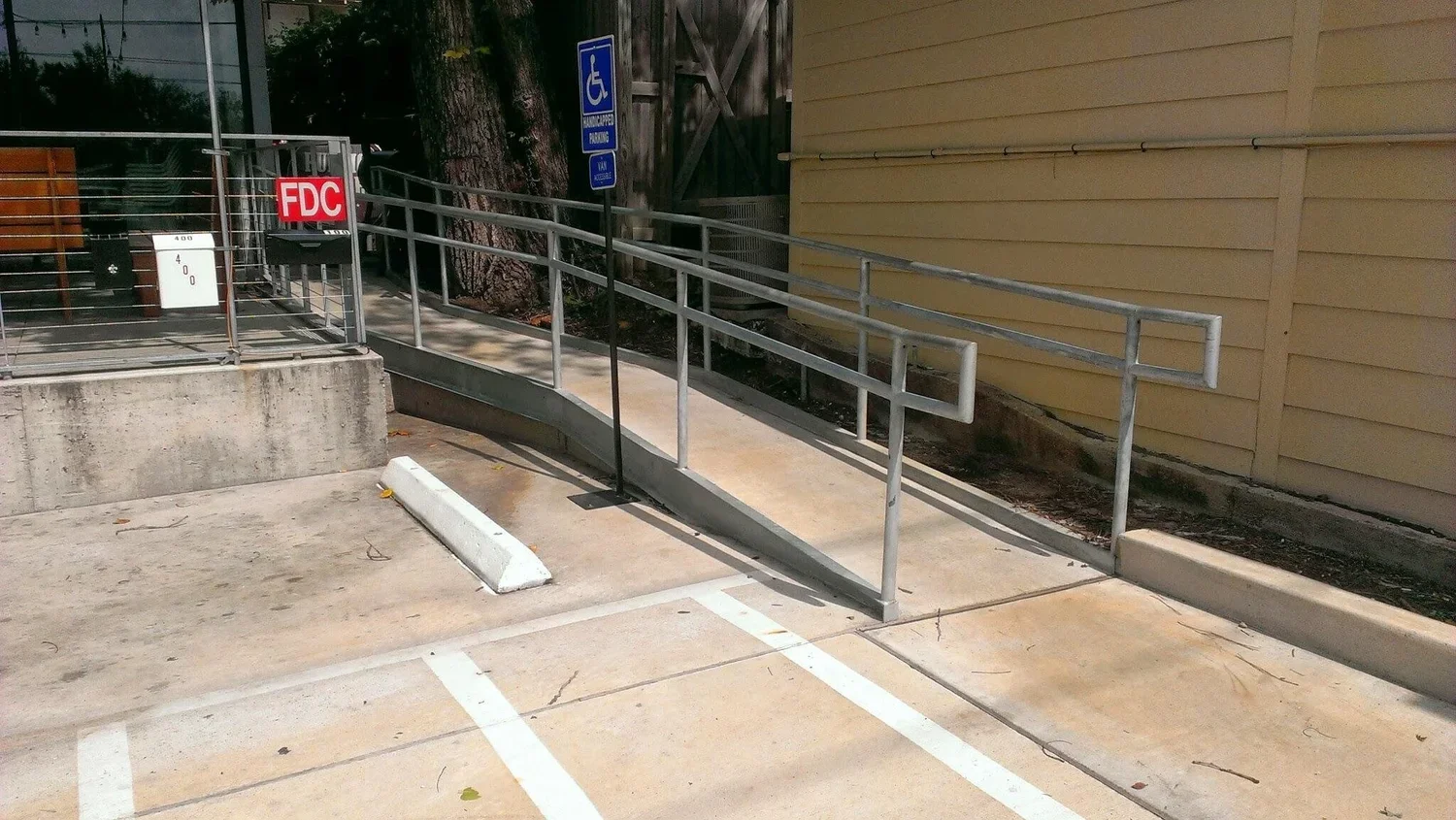
A compliant example of edge protection, featuring a 4-inch curb along the ramp and continuous handrails.
According to the 2012 Texas Accessibility Standards (TAS), Section 405.9:
“Edge protection complying with 405.9.1 or 405.9.2 shall be provided on each side of ramp runs and at each side of ramp landings.”
Edge protection can be either an extended surface beyond the handrail, or a curb or similar barrier.
405.9.1 Extended Floor or Ground Surface. The floor or ground surface of the ramp run or landing shall extend 12 inches (305 mm) minimum beyond the inside face of a handrail complying with 505.
405.9.2 Curb or Barrier. A curb or barrier shall be provided that prevents the passage of a 4 inch (100 mm) diameter sphere, where any portion of the sphere is within 4 inches (100 mm) of the finish floor or ground surface.
This language is identical to the 2010 ADA Standards for Accessible Design (ADA 2010).
When Is Edge Protection Required?
Under TAS and ADA standards, edge protection is required only in specific conditions:
1. On accessible ramps and landings with drop-offs along the sides.
2. The ramp must meet the definition of a ramp under TAS/ADA, meaning it has a running slope greater than 1:20 (5%).
In these cases, a minimum 4-inch curb or equivalent feature must be installed to meet code requirements. The purpose is to prevent wheelchair casters, canes, or feet from slipping off the edge[JM1].
When Is Edge Protection Not Required?
There are several common scenarios where edge protection is not mandated by TAS/ADA:
1. Curb ramps: These are not required to have edge protection, even when connecting to vehicular ways or parking areas.
2. Accessible routes with slopes ≤ 5%: A gently sloped walking surface that is not classified as a ramp does not need edge protection. This applies even if there are changes in the adjacent grade.
3. Flush transitions: When the accessible route is level with the surrounding landscaping or paving, there is no drop-off. In this case, edge protection is not needed.
Although it may be tempting to provide edge protection at locations where it is not required, edge protection should never be provided at a location where it would be unexpected or where it could create a tripping hazard.
Building Code Overlap: IBC Guardrail Requirements
While the ADA and TAS focus on accessibility, building codes such as the International Building Code (IBC) address occupant safety more broadly. Specifically, the IBC requires guards in locations where there is a drop-off of more than 30 inches.
Edge protection and guards serve different functions:
Edge protection is typically a low curb or barrier to keep wheels and feet from slipping off the edge.
Guards are taller structures (usually 42 inches high) designed to prevent falls by standing adults.
These requirements can overlap. A ramp or platform may need edge protection according to ADA/TAS. It might also require a guardrail under IBC, based on its height and location. Coordination between accessibility and building codes is essential to avoid compliance gaps.
Why Code Coordination Matters
Different codes have different scopes. Accessibility standards like ADA and TAS focus on usability for individuals with disabilities. The IBC focuses on broader life safety concerns for all occupants. Both may apply to the same feature but with different thresholds and intent.
For example, a platform that is 32 inches above grade with an accessible ramp will likely trigger both:
Edge protection per TAS 405.9, and
A guard per IBC Section 1015.
Design teams must review both sets of requirements during the planning and construction phases. This practice helps avoid costly revisions later.
ACI’s Role in Compliance
At ACI, we regularly review ramp, and walkway designs as part of our accessibility compliance assessments. Our role is to confirm that minimum accessibility requirements are met in accordance with federal and state standards. We also check for coordination with applicable building codes that may impose additional life safety requirements, such as guards.
Conclusion
Edge protection is a vital part of accessible route design, especially for ramps and landings adjacent to grade changes. Knowing exactly when it is required—and when it is not—ensures both compliance and clarity.
By concentrating on code-defined thresholds, design professionals can reduce confusion and liability. This approach helps ensure that their projects meet the expectations of both accessibility and building officials.
For assistance reviewing your project for compliance with ADA, FHA, and applicable building codes, ACI offers third-party plan reviews and site inspections nationwide.
Disclaimer: This content is for general informational purposes only and does not constitute legal or regulatory advice. Accessibility requirements vary by jurisdiction. Always consult federal, state, and local regulations and licensed professionals to ensure compliance.
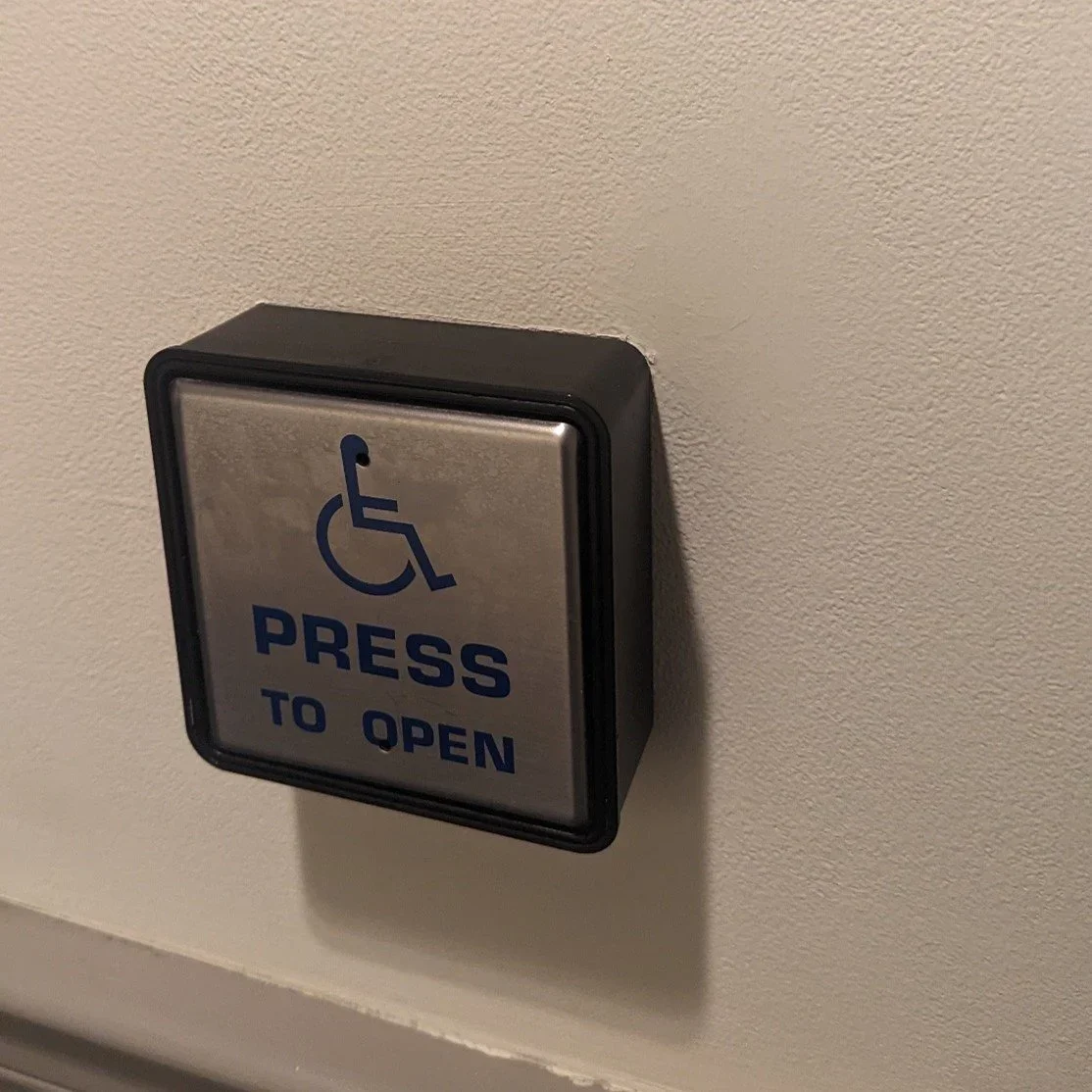
Automatic Doors for Accessibility: Where and When
Automatic doors should be located in the most convenient location for the intended users. This could mean that the automatic door is placed off to a side, closer to a ramp for example, rather than centrally located where the majority of people enter.
It is a common misconception that public buildings are required to have automatic doors. In fact, the Americans with Disabilities Act (ADA) does not have mandatory requirements to install automatic doors for any type of building. While the ADA Standards for Accessible Design do not have scoping requirements for automatic doors, they do include some technical requirements for automatic and power-assisted doors for when they are installed.
Similarly, the Fair Housing Act Design Requirements for multi-family housing do not mandate automatic doors for any location. Note: Be sure to check with local authorities since the IBC 2021 and later editions require automatic doors at Assembly, Business, Mercantile and R-1 Residential occupancies with certain occupant loads.
What are Automatic and Power-Assisted Doors?
ANSI/BHMA A156.10 defines an automatic door operator as “A power operated mechanism that is attached to a door for the purpose of mechanically opening and closing a door upon the receipt of an activating signal.” The activating signal can be a motion sensor, floor mat or a push button in the vicinity of the door. Doors with push buttons are referred to as “Knowing Act” automatic doors.
A Power-Assisted Door is a manual door with a power mechanism that activates by pushing or pulling the door, reducing the opening resistance of a self-closing door to allow easier manual opening of the door. Requirements for power assisted doors are found in ANSI/BHMA A156.19.
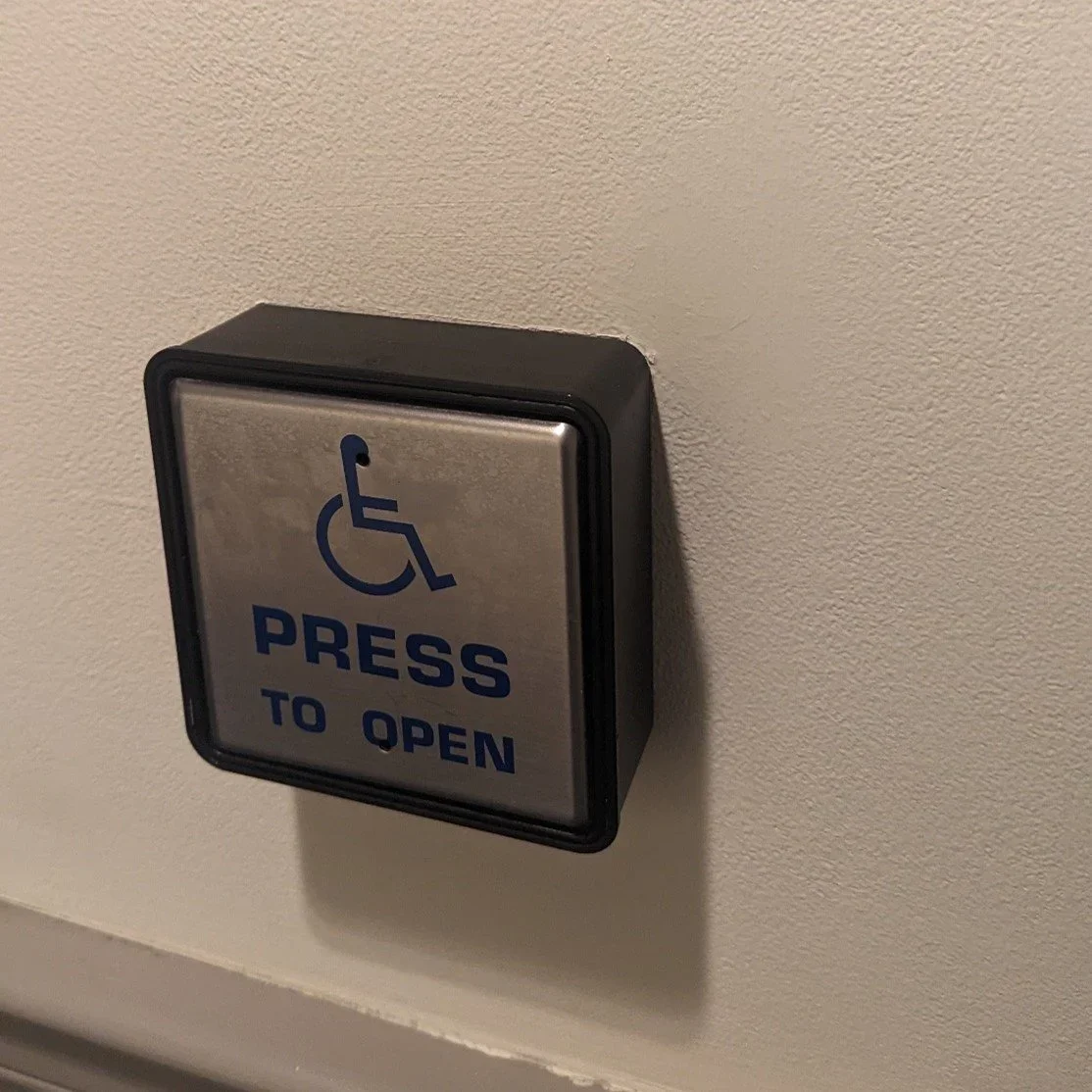
There are some situations where automatic doors are either advisable or necessary. For Convenience Entrances to grocery stores, hospitals and similar facilities often have automatic doors to improve access and to generally make life easier for all people using the entrance.
Pressure differentials and wind can sometimes make it very difficult to open exterior doors. Keep in mind that there are no requirements for the maximum force necessary to open exterior doors. Sometimes it is necessary to install an auto-opener where it is otherwise difficult to open exterior doors. Any facility where it is anticipated that there will be a larger population of elderly guests, guests with disabilities, or families with young children, should consider installing automatic doors at public entrances.
To Address Existing Non-Accessible Conditions
An accessible door is required to have level landings on both sides of the door and additional maneuvering clearances to provide sufficient space for wheelchair users to open a door unassisted. For example, if you are pulling a door towards you, there must be clearances that extend 18” to the side of the door and 60” away from the door and this area must be mostly level and not ramped.
If there are slopes at the door, a wheelchair user will have difficulty remaining steady when they try to open the door. If there are insufficient clearances at the door, the user might not be able to maneuver their chair or walker beyond the swing of the door.
For example, if an existing entry door has a sloped exterior landing, it may be necessary to install an automatic door to provide an accessible entry. Another example, if there are narrow corridors leading up to the entry door of a restroom, or tight clearances within the restroom, an automatic opener can greatly improve access.
Providing an automatic opener at a swinging door can eliminate the need to make expensive alterations for an existing non-compliant door. Keep in mind that only Automatic Doors can be used to address non-accessible conditions. Power-Assisted doors can improve access but do not provide the same exceptions that are allowed with automatic doors. A more detailed explanation of these requirements can be found below.
A Reasonable Accommodation for an Employee
While the ADA Standards for Accessible Design do not mandate automatic doors, it is important to remember that the Americans with Disabilities Act is a broad civil rights law that requires employers to provide reasonable accommodations to employees with disabilities when they are requested.
Even if a facility fully complies with the ADA Standards, it may be necessary to make further modifications to accommodate an employee if and when the need arises. This applies to both private and public employers. Reasonable accommodations may include minor changes such as rearranging furniture or providing desks that accommodate an employee’s needs but can also include significant alterations like installing ramps or providing automatic doors at specific locations. Power-Assisted doors can also be used to provide accommodations. Under ANSI/A117.1 section 404.3.4, low energy automatic and full power automatic doors are exempted from meeting the maneuvering clearance requirements.
More information about reasonable accommodations can be found at the Department of Labor website: https://www.dol.gov/agencies/odep/program-areas/employers/accommodations
Important Considerations
When installing an automatic door, it is important to consider the placement of sensors or push-buttons. If a push-button is utilized, a level clear floor space must be provided at the button. A common mistake is placing the push button in a location where the operated door swings into the clear floor space, potentially striking the person who pressed the button. The button should be placed in a convenient location along the approach to the door.
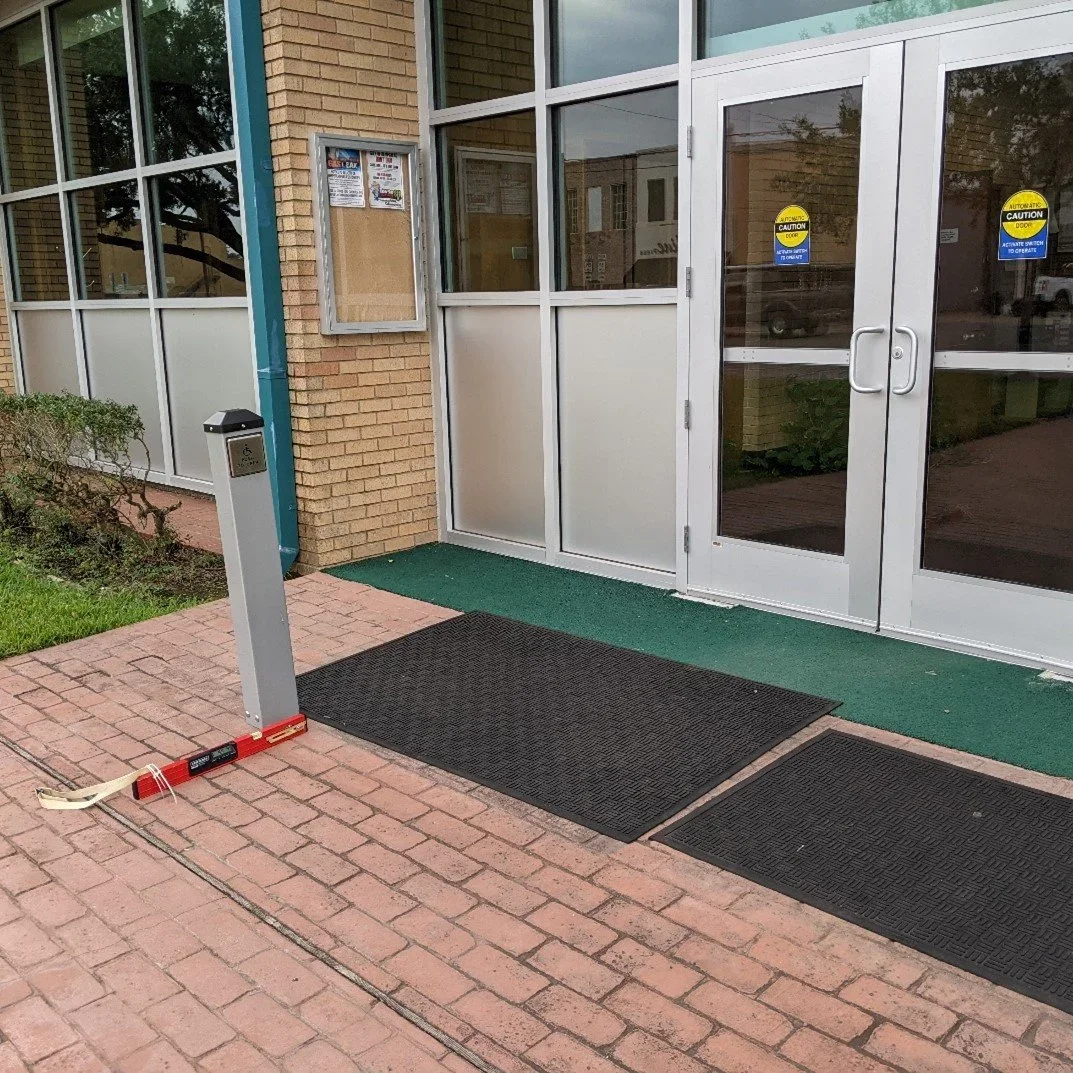
Photo 1 :Photo 1: A level clear floor space is required at push buttons.
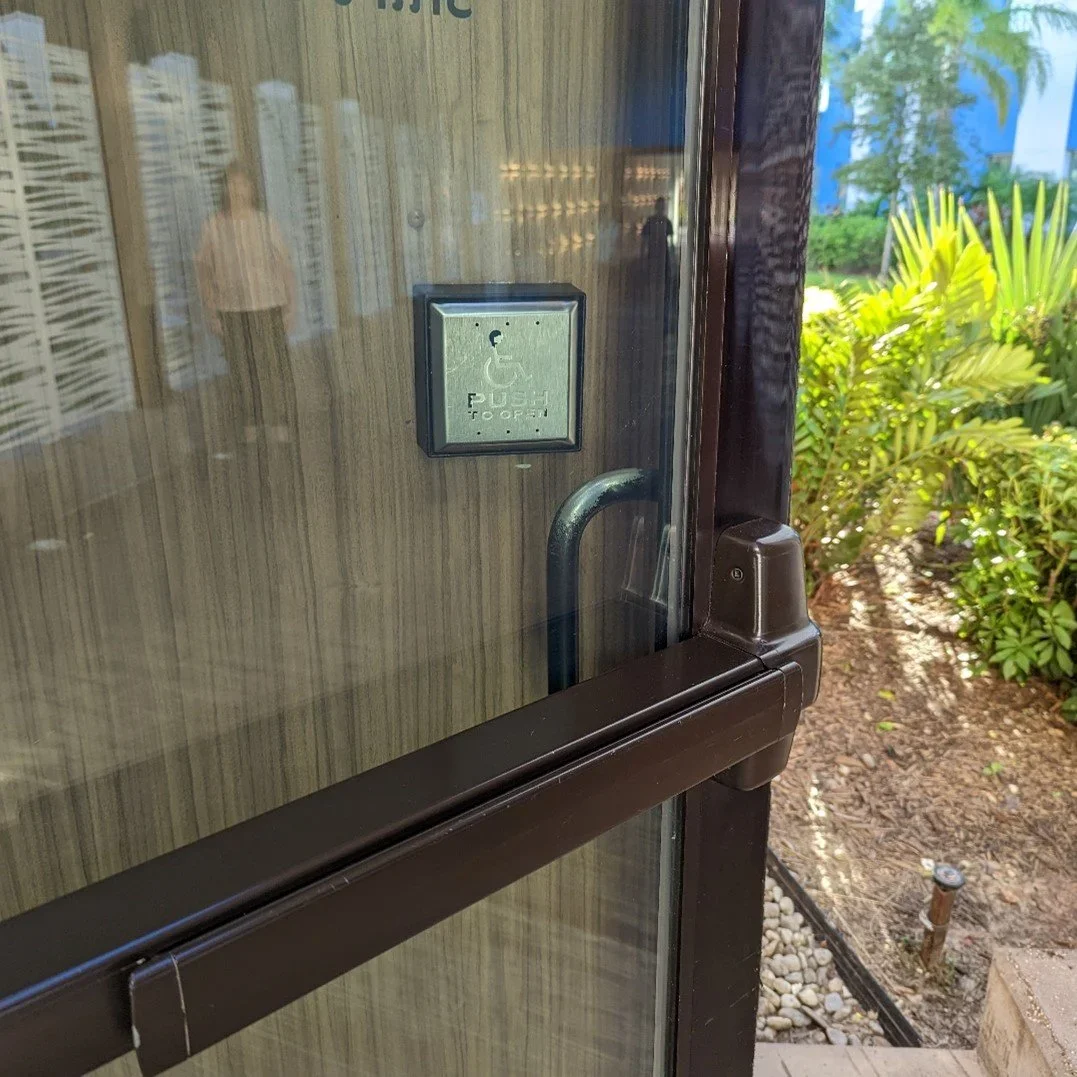
Photo 2 : Doors cannot swing into the space in front of a push-button.
Timing of the door closing is also important. If the push button is further away from the door, the hold-open time may need to be increased to give a person sufficient time to enter. This is regulated by ANSI/BHMA A156.10.
Automatic doors should be located in the most convenient location for the intended users. This could mean that the automatic door is placed off to a side, closer to a ramp for example, rather than centrally located where the majority of people enter.
A More Detailed Explanation of Maneuvering Clearances at Automatic Doors
Requirements for clearances around manual swinging doors are found in Table 404.2.4.1 of the ADA Standards. These clearances are specific to manual doors and are not always applicable to automatic doors. Most of the requirements for Automatic Doors are found in ANSI/BHMA A156.10. This document includes requirements for clearances, timing and locations of sensors and push buttons.
Section 404.3.2 of the ADA Standards specifies when maneuvering clearances are required automatic and power-assisted doors. Power-Assisted Swinging Doors: These doors are always required to have the normal accessible maneuvering clearances. Installing a power-assist is acceptable for reasonable accommodations but will not get around other accessibility requirements.
Automatic Doors in New Construction: If an automatic door is serving an accessible means of egress, it must:
be equipped with standby power, OR
remain open in the power-off conditions, OR
have the minimum accessible maneuvering clearances required for a manual door.
Automatic Doors in Renovations
An automatic door can be used to address slope or maneuvering clearance issues in an existing building. It is not necessary for the door to have standby power. The requirement for standby power only applies to automatic doors serving “accessible means of egress”. Section 207 of the Standards references IBC 2000 or IBC 2003 for means of egress. Both documents include exceptions that state, “Accessible means of egress are not required in alterations to existing buildings.” Since accessible means of egress are not required for existing buildings, automatic doors in existing buildings are not required to have standby power.
Conclusion
Navigating the ANSI/BHMA A156.10 can be complex in regards to meeting accessibility standards. Our team of Registered Accessibility Specialists is here to guide you through each phase, ensuring your project meets or exceeds these standards from the initial planning stages through final inspection. We pride ourselves on being “the architect’s architect,” dedicated to promoting inclusive design and protecting your project from compliance issues down the line.
Visit www.acico.com to learn more about our services and how we can support you in creating compliant, inclusive, and inviting spaces.
Disclaimer: This content is provided for general informational purposes. Always consult the Texas Department of Licensing and Regulation (TDLR), current codes, and relevant authorities to confirm the latest regulations and standards for your specific project.
Countertop Accessibility: Not All Work Surfaces Are Treated Equally
Ensuring accessibility is more than a legal requirement—it is a fundamental design principle that impacts usability, equity, and compliance. While many in the design and construction industries are familiar with general accessibility requirements, not all work surfaces are treated equally under the Texas Accessibility Standards (TAS) and the Americans with Disabilities Act (ADA).
Ensuring accessibility is more than a legal requirement—it is a fundamental design principle that impacts usability, equity, and compliance. While many in the design and construction industries are familiar with general accessibility requirements, not all work surfaces are treated equally under the Texas Accessibility Standards (TAS) and the Americans with Disabilities Act (ADA).
The 2010 ADA Standards for Accessible Design (ADAAG) and the 2012 TAS contain critical distinctions in how countertops, work surfaces, and service counters must be designed to accommodate individuals with disabilities. Misinterpretations of these requirements are among the most common accessibility violations, often leading to costly retrofits, failed inspections, or litigation.
Understanding Countertop and Work Surface Accessibility Key Compliance Considerations Under TAS and ADAAG
When evaluating countertop accessibility, several factors dictate compliance:
Work Surface Height – Accessible dining surfaces (like bars or food prep areas) max out at 34 inches AFF (TAS 902.3, ADA 902.3), while standard work surfaces—like kitchen counters or employee desks—can hit 36 inches unless required to be accessible. Know the space’s purpose to get it right.
Knee and Toe Clearance – To be usable by wheelchair users, countertops that require a forward approach must provide knee clearance of at least 27 inches AFF, extending at least 17 inches beneath the surface (TAS 306.3, ADA 306.3). No clearance, no access.
Reach Ranges for Controls and Features – Controls or outlets above the counter must sit between 15 and 48 inches AFF (TAS 308, ADA 308)—keep them reachable.
Service Counters vs. Work Surfaces – A checkout counter (up to 36 inches for a portion, per TAS 904) isn’t a dining surface (34 inches max). TAS and ADA treat them differently, so match the rules to the function.
Why Not All Work Surfaces Are Treated Equally
The treatment of countertops and work surfaces under accessibility regulations depends on function, location, and user interaction.
Public vs. Employee-Only Spaces – Work surfaces that are intended only for employees are not necessarily required to be accessible under ADAAG unless they are used by employees with disabilities. However, TAS contains additional provisions that may trigger accessibility requirements depending on project scope and jurisdictional enforcement.
Residential vs. Commercial Applications – TAS includes specific provisions for multifamily housing that apply to kitchen and bathroom work surfaces in covered units, where requirements may differ from those in commercial or public buildings.
Mixed-Use Facilities – In spaces with both public and private functions (e.g., hotel kitchenettes, co-working spaces, educational facilities), determining which surfaces require compliance often depends on how the space is classified under TAS and ADAAG.
Common Oversights That Lead to Compliance Failures
Despite clear regulatory guidelines, many accessibility violations occur not because of poor initial design, but due to operational misuse or oversight. One of the most common examples is accessible counters that are repurposed into employee workstations, rendering them useless for customers who need them.
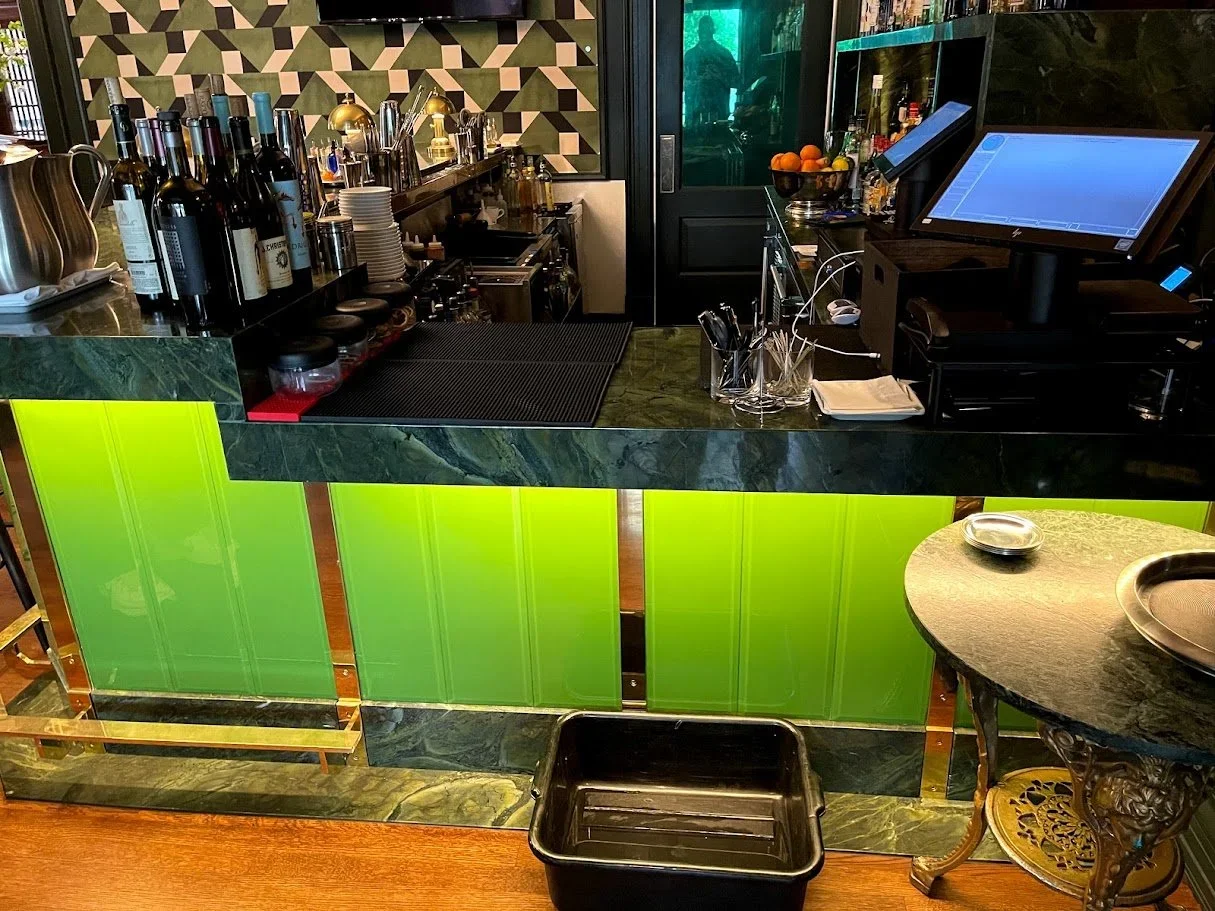
Real-World Example: When Accessibility Gets Overlooked in Practice The image below illustrates a common compliance failure—a bar that originally included a lowered accessible counter designed to accommodate wheelchair users. However, this space has been repurposed as an employee workstation, blocking access entirely.
What went wrong?
The lowered section—meant to stay clear at a maximum of 34 inches —now hosts a bulky POS system and utensils, blocking customer use. A trash bin and nearby furniture partially block the forward approach, making it impossible to reach the counter. Despite starting with a compliant design, daily operations turned this accessible bar into an employee-only zone—a common pitfall in restaurants, bars, and retail spaces.
Key Takeaway: Designing for accessibility is only part of the solution. Ensuring that accessible spaces remain functional in daily operations is equally important.
How to Avoid This Issue
✅ Train staff on accessibility compliance to ensure designated accessible areas
remain functional.
✅ Conduct regular accessibility audits to verify that spaces are being used as
intended.
✅ Engage a Registered Accessibility Specialist (RAS) to assess compliance and
provide recommendations before an inspection or lawsuit occurs.
The Role of TAS Inspections and Premises Liability Assessments
A TAS inspection or accessibility plan review helps identify these issues before construction is completed, reducing the risk of failed inspections, costly modifications, or lawsuits.
During a TAS inspection, a Registered Accessibility Specialist (RAS) evaluates compliance with all applicable standards, verifying that countertops, casework, and other built-in elements meet height, reach, and clearance requirements. When engaged early, this process helps architects, developers, and business owners avoid accessibility pitfalls that could lead to non-compliance penalties or legal challenges.
Universal Design: Beyond Minimum Compliance
Beyond code compliance, incorporating universal design principles into countertop layouts ensures that spaces are accessible to the widest range of users. This proactive approach enhances usability for individuals of all abilities while reducing the likelihood of future accessibility modifications.
Best Practices for Inclusive Countertop Design
✔ Provide multi-height workstations that accommodate both standing and seated
users.
✔ Use contrasting edge treatments for individuals with low vision to distinguish
surfaces.
✔ Ensure seamless integration with adjacent features (appliances, cabinetry,
plumbing) to prevent usability conflicts.
✔ Incorporate adaptable solutions that can be modified for changing needs over
time.
Conclusion
Not all work surfaces are treated equally under TAS standards and ADAAG (guidelines for ADA Compliance), and misunderstanding these distinctions can lead to costly compliance failures. Whether designing for public, commercial, or multifamily residential spaces, accessibility should be integrated from the beginning—not as an afterthought. At ACI, our Registered Accessibility Specialists provide TAS plan reviews, inspections, and premises liability assessments to ensure compliance and reduce risk. Our expertise helps clients avoid common pitfalls, navigate complex regulations, and create environments that are both compliant and user-friendly.
Need help ensuring your project meets accessibility standards? Contact ACI today.
Disclaimer: This content is for general informational purposes only and does not constitute legal or regulatory advice. Accessibility requirements vary by jurisdiction. Always consult federal, state, and local regulations and licensed professionals to ensure compliance.
Avoid Accessibility Compliance Issues with Proactive Planning and Inspections
Ensuring accessibility compliance isn’t just about meeting legal requirements—it’s about designing functional, inclusive spaces that work for everyone. The Americans with Disabilities Act (ADA) provides a framework for accessibility in public and commercial buildings, but true compliance starts long before a facility is open to the public.
Ensuring accessibility compliance isn’t just about meeting legal requirements—it’s about designing functional, inclusive spaces that work for everyone. The Americans with Disabilities Act (ADA) provides a framework for accessibility in public and commercial buildings, but true compliance starts long before a facility is open to the public.
By incorporating accessibility considerations early in the design process, architects, developers, and property owners can avoid costly retrofits, construction delays, and compliance risks while improving the overall usability of a space. Thoughtful accessibility planning ensures that buildings serve their intended users effectively while maintaining regulatory compliance.
Understanding ADA Compliance
Enacted in 1990, the ADA established guidelines to ensure equal access to public and commercial spaces for individuals with disabilities. These regulations apply to a wide range of built environments, including entrances, pathways, restrooms, parking facilities, and signage. However, compliance isn’t just about checking a box—it’s about integrating accessibility into the core design of a space. Proper planning and regular accessibility reviews ensure that usability and compliance are considered holistically rather than as afterthoughts.
The Role of Building Code and Accessibility Reviews
Building codes establish minimum safety and structural requirements, addressing elements such as fire protection, egress, and occupancy. While these codes include some accessibility provisions, they are not a substitute for a dedicated accessibility review.
An accessibility compliance review focuses specifically on usability for individuals with disabilities. It ensures that features like entrances, ramps, pathways, restrooms, and signage meet ADA, Fair Housing Act (FHA), and state-specific requirements. These reviews go beyond code minimums to assess real-world usability, helping prevent compliance issues that may not be flagged in a standard building code review.
By conducting both building code and accessibility reviews, project teams can address compliance holistically, ensuring structural integrity while also meeting accessibility standards. This proactive approach minimizes risk, avoids costly revisions, and helps create a functional, accessible, and legally compliant built environment.
The Importance of Accessibility Compliance
Accessibility compliance isn’t just a regulatory requirement—it’s a fundamental part of good design. When accessibility is considered from the start, buildings function better, serve a broader range of users, and reduce the risk of costly modifications. A well-executed accessibility review identifies potential barriers that could limit access for individuals with disabilities. These barriers can range from door hardware that is difficult to operate to poorly placed signage or a misaligned site layout that makes navigation challenging. Addressing these concerns early in the process prevents future issues and improves the overall user experience.
Key accessibility considerations include:
Entrances and Exits – Door widths, thresholds, and automatic door functionality.
Interior Pathways – Corridor widths, floor surfaces, and clearances.
Restrooms – Placement of grab bars, accessible stall dimensions, and sink heights.
Parking Facilities – Properly designed accessible spaces, compliant signage, and clear, direct routes to building entrances.
By focusing on real-world usability, accessibility compliance ensures that spaces are not just legally compliant but truly functional for all users.
Spotting Accessibility Barriers in Parking Facilities
Parking lot compliance is a critical component of accessibility but is often overlooked until issues arise. A well-designed, accessible parking layout ensures that individuals with disabilities can safely and efficiently reach the building entrance without encountering barriers.
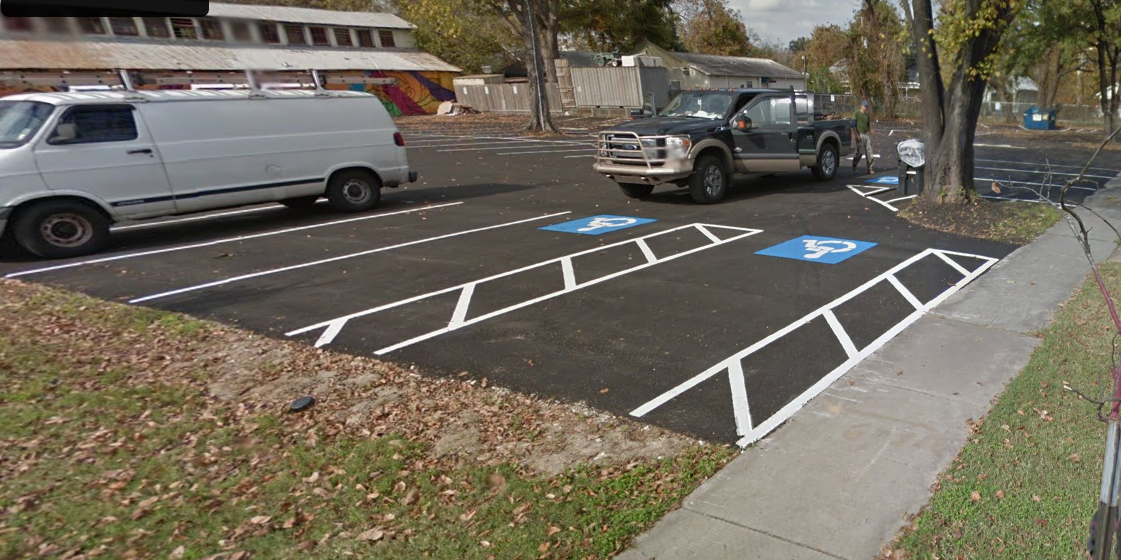
Take a look at the image below—can you identify the accessibility issues in this parking lot?
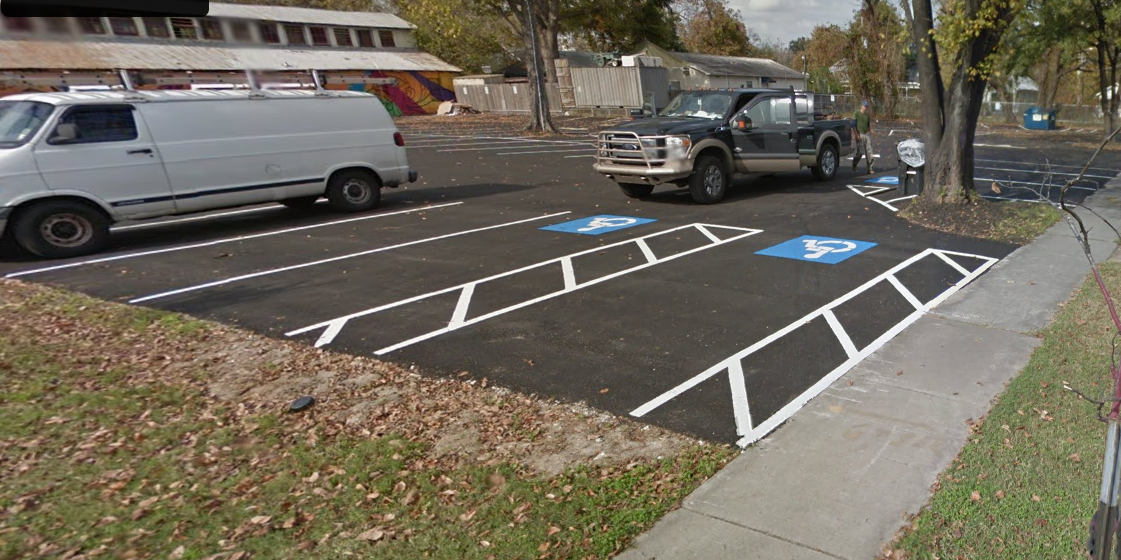
Common mistakes that result in non-compliant parking spaces include:
1. Obstructions in the space – Trees, poles, or other barriers blocking parking or access aisles.
2. Missing or incorrect signage – Accessible spaces must be properly marked with the required signs and symbols.
3. Poor location – Accessible spaces should be located on the shortest, most direct route to the building entrance.
4. Insufficient access aisle width – Access aisles must be wide enough for wheelchair maneuverability.
5. Improperly designated spaces – In the background, you can see that the “accessible” space near the truck lacks a compliant access aisle, rendering it unusable.
Ensuring compliance in parking facilities is not just about following standards; it impacts the safety and usability of individuals with mobility impairments. A properly designed and maintained parking area is a key first step in making a facility accessible to all.
Conducting ADA Compliance Inspections
Regular accessibility inspections proactively ensure that spaces remain compliant and functional throughout design, construction, and long-term use. While building code inspections focus on structural and safety requirements, ADA Compliance inspections precisely assess usability and accessibility.
The Role of Accessibility Specialists
Ensuring accessibility compliance requires specialized knowledge of ADA, FHA, and state-specific regulations. While building code officials and general inspectors may review basic accessibility provisions, accessibility specialists focus exclusively on the details that impact usability and compliance.
In Texas, accessibility professionals are formally recognized as Registered Accessibility Specialists (RAS) under the Texas Department of Licensing and Regulation (TDLR). Under Texas state law, this designation allows RAS professionals to conduct official plan reviews and inspections. However, outside of Texas, accessibility specialists perform the same essential function—evaluating design plans, conducting site inspections, and helping project teams navigate federal, state, and local accessibility requirements.
The Consequences of Non-Compliance
Failing to meet accessibility standards can lead to unexpected challenges, including costly modifications, project delays, and legal disputes. However, the real impact of non-compliance goes beyond financial penalties—it affects usability, public perception, and long-term property value.
Steps to Achieve and Maintain Accessibility Compliance
1. Incorporate Accessibility Early in Design – Prevent conflicts between aesthetics, functionality, and compliance.
2. Conduct Accessibility Plan Reviews – Catch compliance gaps before permitting and construction with a Compliance Assessment.
3. Perform On-Site Inspections – Ensure proper installation of accessible features.
4. Stay up to Date on Regulations. Follow changing federal, state, and local codes.
5. Educate Staff and Facility Managers – Maintain compliance over the long term.
Conclusion: Prioritizing Accessibility for Better Design
Accessibility compliance isn’t just about regulations—it’s about creating spaces that work for everyone. Thoughtful accessibility planning ensures that buildings are functional, inclusive, and adaptable to the needs of all users while protecting project stakeholders from costly revisions and compliance risks.
At ACI, we support architects, developers, and property owners through every phase of accessibility compliance. Our expertise ensures that compliance is integrated into the design from the start, minimizing risks and maximizing usability.
Visit our website today to speak with a Registered Accessibility Specialist.
To learn more, visit www.acico.com
Disclaimer: This content is for general informational purposes only and does not constitute legal or regulatory advice. Accessibility requirements vary by jurisdiction. Always consult federal, state, and local regulations and licensed professionals to ensure compliance.
Covered Parking, Equal Access
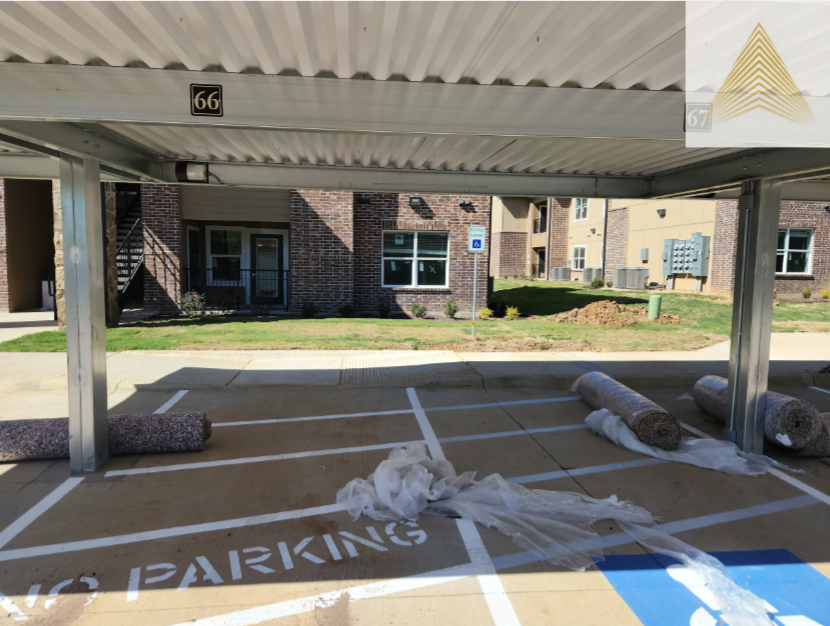
Providing accessible parking is a legal mandate and a cornerstone of inclusive building design. When you offer covered parking—whether it’s general, reserved, employee-only, or contract parking—you must provide covered accessible parking as well. This is a mandatory requirement under the 2012 Texas Accessibility Standards (TAS) and 2010 ADA Standards. Overlooking this requirement can lead to costly alterations, penalties, legal disputes, and customer dissatisfaction. Addressing accessibility early in your planning process is a proactive step toward creating equitable spaces while minimizing future risk.
Ensuring Inclusivity Through Covered Accessible Parking
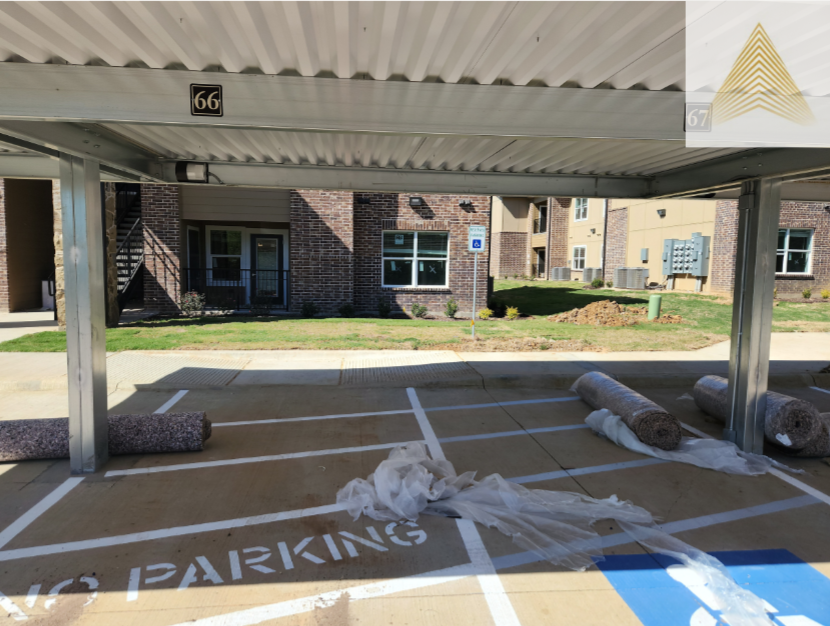
Providing accessible parking is a legal mandate and a cornerstone of inclusive building design. When you offer covered parking—whether it’s general, reserved, employee-only, or contract parking—you must provide covered accessible parking as well. This is a mandatory requirement under the 2012 Texas Accessibility Standards (TAS) and 2010 ADA Standards. Overlooking this requirement can lead to costly alterations, penalties, legal disputes, and customer dissatisfaction. Addressing accessibility early in your planning process is a proactive step toward creating equitable spaces while minimizing future risk.
Key 2012 TAS Requirements
Although the 2012 TAS does not explicitly say “covered accessible parking is required,” the obligation stems from the principle of equal access. If you provide covered parking for one group, you must also provide a comparable covered option for individuals with disabilities. The sections most relevant to parking include:
Section 208 (Scoping Requirements for Parking)
Number of Accessible Spaces: Specifies how many accessible parking spaces must be provided based on the total number of parking spaces.
Exception: Parking spaces used exclusively for buses, trucks, other delivery vehicles, law enforcement vehicles, or vehicular impound are not required to comply with Section 208 if the lots are not accessed by the public. If these restricted lots are accessed by the public, you must provide a passenger loading zone in compliance with Section 503.
Section 502 (Technical Requirements for Parking Spaces)
Dimensions & Signage: Details the minimum width, access aisle size, signage, and marking requirements for accessible parking spaces.
Vertical Clearance (Section 502.5):
A minimum of 114 inches (2895 mm) of vertical clearance is required at passenger loading zones and along at least one vehicle access route to these zones from site entrances/exits.
A minimum of 98 inches (2490 mm) of vertical clearance is required at van-accessible parking spaces and along at least one vehicle access route to these spaces from site entrances/exits.
Covered Parking: Who Must Comply?
All covered parking areas intended for use by employees, customers, visitors, or contract holders must provide equivalent accessible covered parking to comply with the 2012 TAS. This holds true even if the spaces are:
Reserved (e.g., for executives, doctors, or high-level staff)
Contract-only or employee-only parking
Leased or managed by a third party (e.g., parking garage operators)
Exception: If a lot is used exclusively for commercial fleet vehicles (buses, trucks, or other delivery vehicles), law enforcement vehicles, or impounded vehicles (and the public does not access it), then accessible parking is not required in that lot as long as passenger loading zones are provided elsewhere for public use and comply with Section 503.
Risks of Non-Compliance
Legal & Financial Penalties
The Texas Department of Licensing and Regulation (TDLR) enforces TAS compliance and may impose fines or mandate retrofitting for non-compliance.
Reputational Damage
Accessibility non-compliance can lead to negative public perception, affecting customer loyalty and brand image.
Potential Litigation
Violations can result in lawsuits or formal complaints filed by individuals, advocacy groups, or governmental entities.
How We Can Help
Navigating the 2012 TAS can be complex. Our team of Registered Accessibility Specialists is here to guide you through each phase, ensuring your project meets or exceeds these standards from the initial planning stages through final inspection. We pride ourselves on being “the architect’s architect,” dedicated to promoting inclusive design and protecting your project from compliance issues down the line.
Visit www.acico.com to learn more about our services and how we can support you in creating compliant, inclusive, and inviting spaces.
Disclaimer: This content is provided for general informational purposes. Always consult the Texas Department of Licensing and Regulation (TDLR), current codes, and relevant authorities to confirm the latest regulations and standards for your specific project